I sat down with David Tuckwell, CIO and co-founder of ETF Shares, to get under the hood of an ETF. David has spent his whole career in index funds and ETFs. He has written a book on them, written about them for the Financial Times and the AFR, and lectures on them at Macquarie University.
We covered the questions most investors never get to ask. Below are the key takeaways. Each one has a button that jumps the video to that part of the conversation.
1. How a new ETF gets made
ETFs are heavily regulated, and David compares launching one to bringing a new drug to market. First the issuer's board signs off. Then ASIC has to approve it. Then come the documents, including the PDS (“the most important document that not enough people ever fully read”). Then the service providers, the most important being the custodian, which holds the assets, and the market maker. Finally the exchange lists it.
It can take anything from two months to two years. The Bitcoin ETFs took about two years.
2. Who picks what’s inside
Index ETFs track an index from a provider like S&P, MSCI or Solactive. A common index such as the ASX 200 is available “off the shelf”. A niche theme may need a new index built from scratch. In an active ETF, the portfolio managers are the product.
David also explained how a newer ETF can try to improve on an existing one, for example by setting clear revenue rules for which companies qualify. That's why two ETFs with similar names can hold quite different things. Always check the index methodology, not just the name.
The index provider usually takes about 10% of the management fee, sometimes less and sometimes more.
3. Some “Aussie” ETFs are really US ETFs
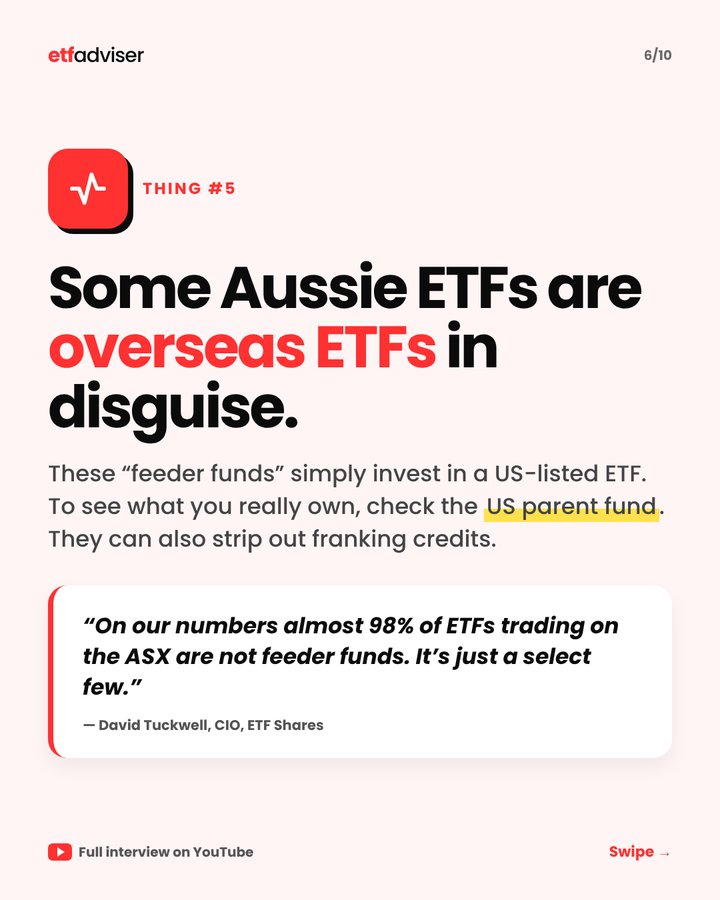
Some ASX-listed ETFs are feeder funds: they simply hold a US-listed version of the same fund. It's cheaper and simpler for the issuer to run. The catch is tax. A US-domiciled fund falls under US tax rules, and it can strip out franking credits on Australian shares.
“On our numbers almost 98% of ETFs trading on the ASX are not feeder funds. It’s just a select few of them.”David Tuckwell, CIO & co-founder, ETF Shares
4. Market makers: who you’re really trading with
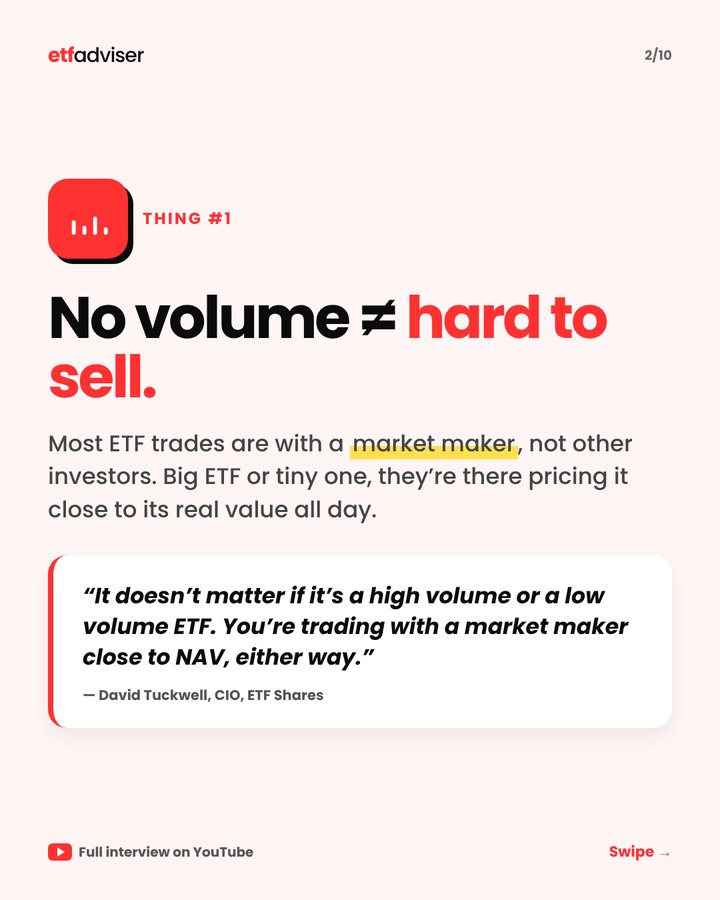
When you buy or sell an ETF, you're probably trading with a market maker, not another investor. Market makers handle over half of all ETF trades on the ASX. They are professional trading firms whose servers sit inside the ASX's own data centre.
Issuers give market makers the full list of holdings, and they price the ETF in real time from the underlying markets. When those markets are closed, they use proxies such as futures. They're paid either a share of the management fee or a flat fee, plus the bid–ask spread.
Technically market makers only have to be in the market for 80% of the trading day. David says he has never seen one actually do that. It isn't in their commercial interest.
5. Don’t trade before 10:30am
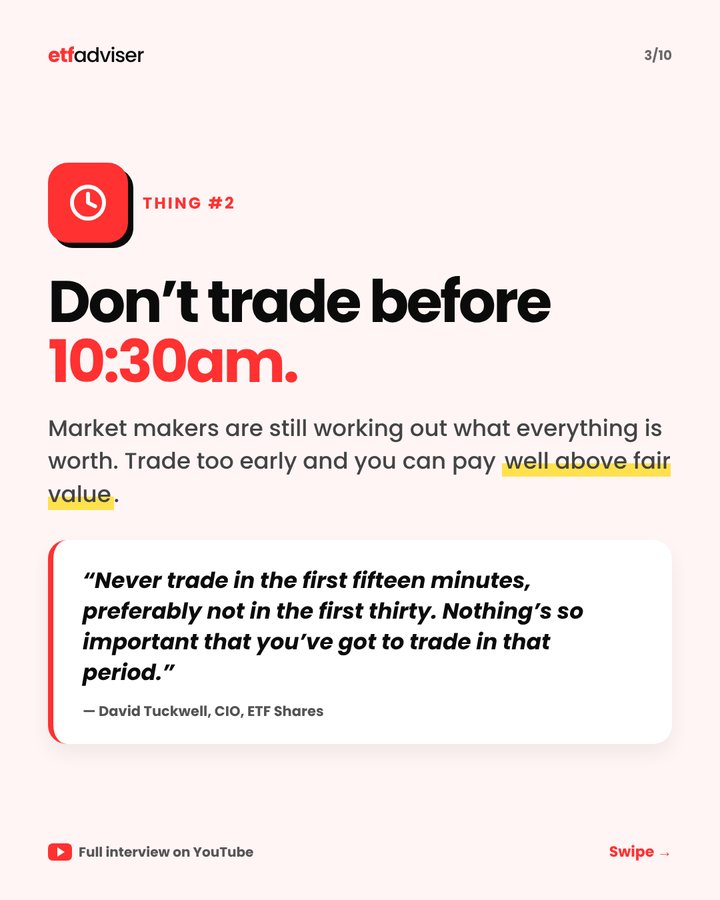
In the first 15–30 minutes, market makers are still working out what everything is worth, and they may be running a thousand ETFs at once. A market order placed early can fill well above fair value. I showed David an example where an ETF briefly traded almost a dollar above its fair price at the open.
“Never trade in the first fifteen minutes, preferably not in the first thirty. Nothing’s so important that you’ve got to trade in that period of time anyway.”David Tuckwell, CIO & co-founder, ETF Shares
6. No volume doesn’t mean you can’t buy or sell
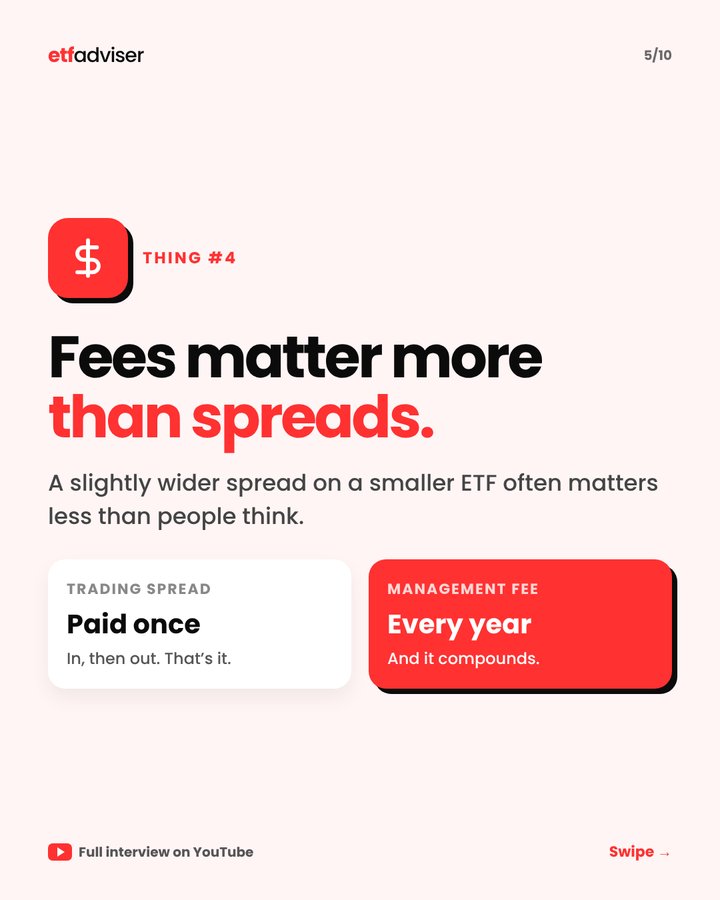
This is one of the biggest myths. Investors judge ETFs like shares: if nothing has traded, it must be hard to buy or sell. But because a market maker is always there, a tiny ETF can be priced just as fairly as a giant one. The spread may be a little wider, but you pay that only once on the way in and once on the way out. The management fee is paid every year and compounds.
If a spread looks too wide, call the ETF provider. They talk to their market makers all day and can ask them to tighten it. Big orders can be broken up and coordinated too.
7. Rebalancing, NAV and iNAV
Most indexes rebalance about quarterly. That's often enough to avoid “style drift”, but not so often that trading costs eat into returns. The dates are set in the index rules, so lots of funds rebalance on the same day. That's why shares tipped to join or leave a big index often move ahead of time (“MSCI Wednesdays”).
NAV is the official value of the fund, usually from the previous close. iNAV is an indicative value updated every 15–20 seconds. It's useful as a guide, but you can't trade at it, and not every ETF publishes one.
8. The distribution trap
ETFs are structured as trusts (AMITs), so the income and capital gains flow through to unitholders. Every unitholder must be treated the same. If a flood of money arrives just before a distribution, the same pot of income is shared between more people, so everyone's yield is diluted. “More mouths to feed,” as David puts it.
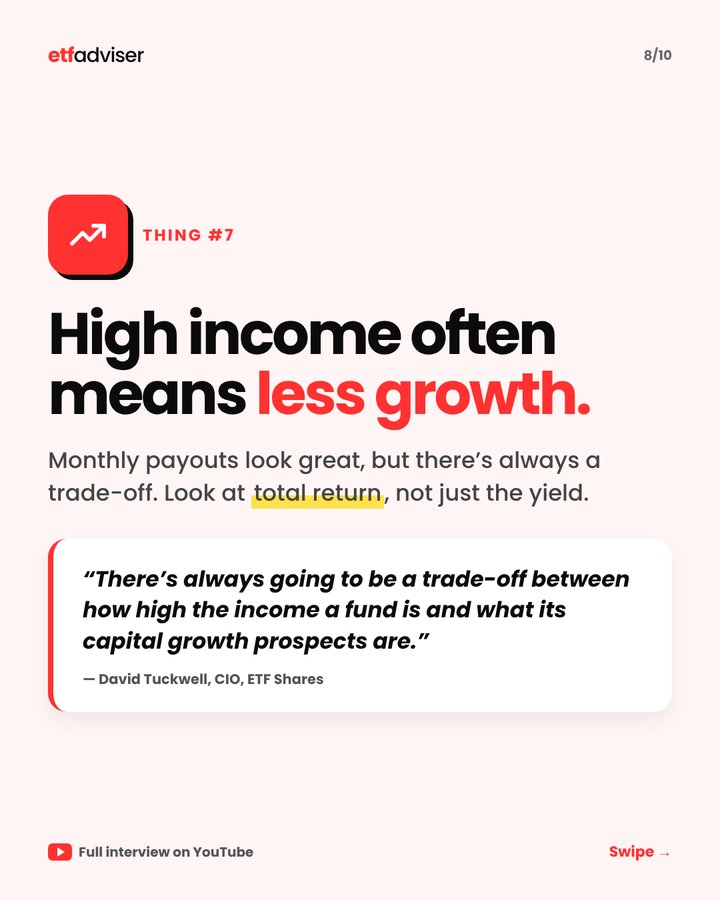
High-income and covered-call ETFs always come with a trade-off: more income usually means less capital growth. Judge them on total return, not just the yield.
9. The #1 thing most investors don’t realise
David's answer: don't judge an ETF by its trading volume or its size. Fund size (FUM) is like YouTube views. It tells you what's popular, not whether it's any good.
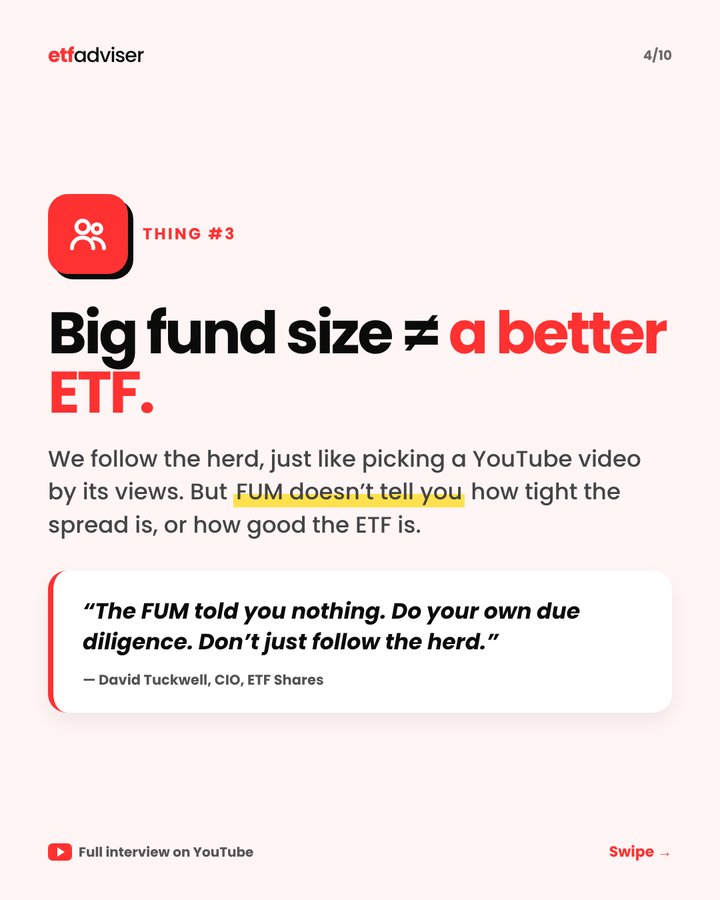
“The FUM told you nothing. Sometimes you’ve got to do your own due diligence and do your own work to figure out what the right ETF is.”David Tuckwell, CIO & co-founder, ETF Shares
Watch the full interview
There's a lot more in the full conversation, including how new units are created and settled, and how cash is managed ahead of distribution day. Watch it on YouTube →